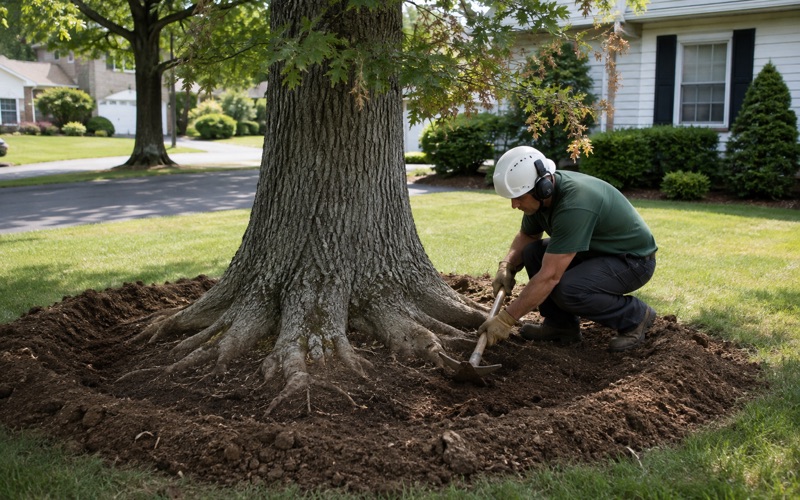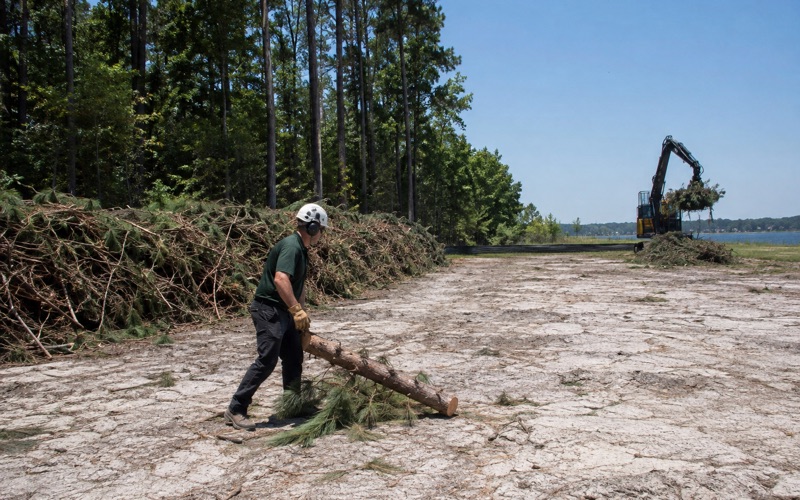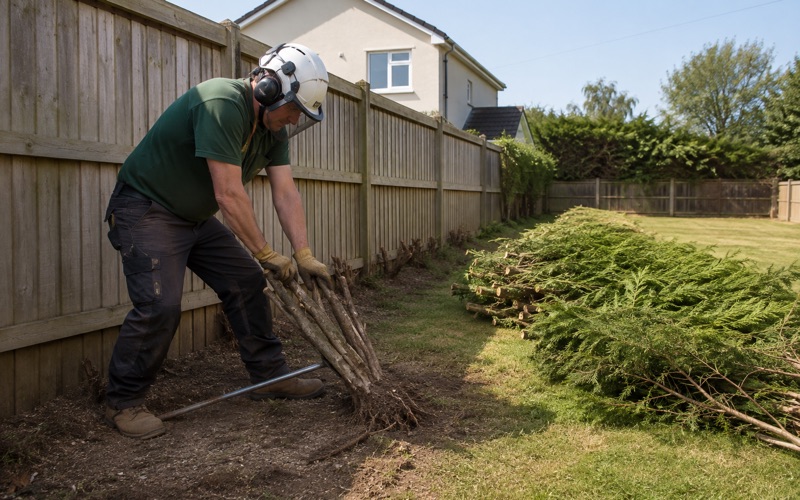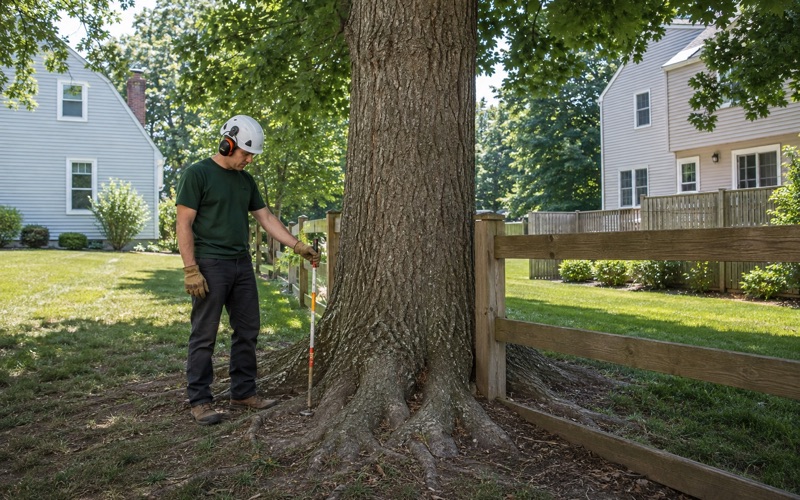
Severn Tree Removal has been doing tree removal in Bowie for more than 20 years, and the work here has a shape we do not run into in most Maryland cities. A very large part of the canopy went in at the same time, which means a very large part of it comes due at the same time.
Every removal we quote begins with a free on-site visit and a written scope: what comes down, how the brush and the trunk rounds are handled, and whether the stump and the grindings are settled in the same number. Nothing is left to be argued about once the chipper is running.
We route permit questions before a date goes on the calendar, because the answer changes with whose right-of-way the tree stands in. Storm calls run on their own clock, with a 24-hour response for fallen trees and anything resting on a structure.
The Levitt cohort, and why it ages out together
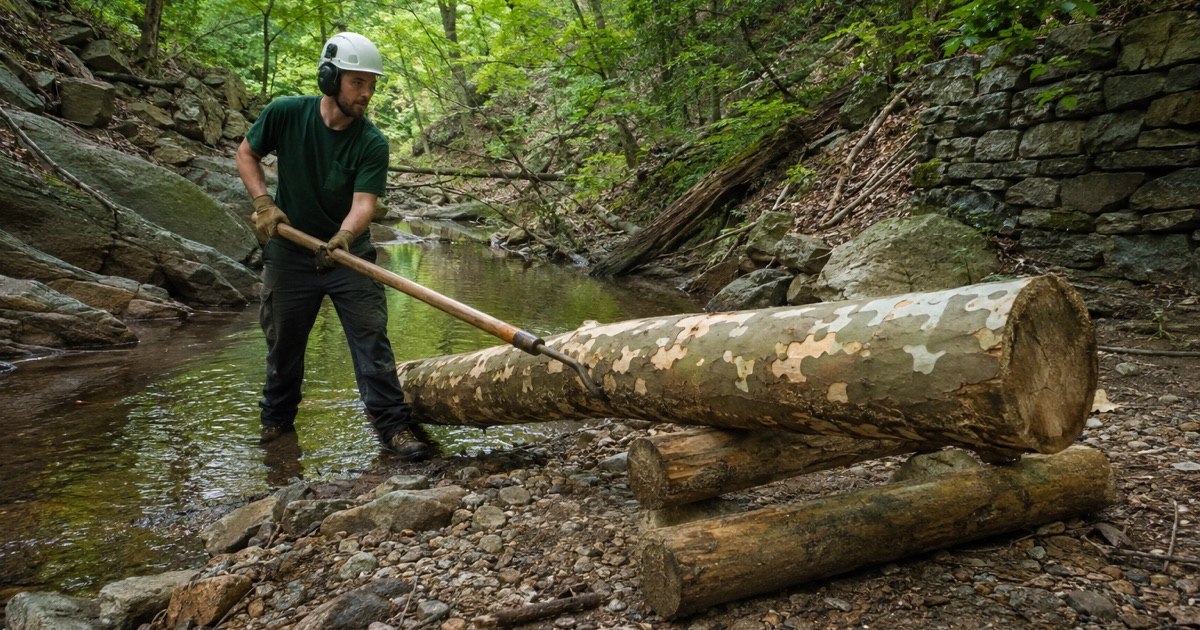
Bowie grew from a small railroad stop into the largest municipality in Prince George’s County, and a great deal of that growth arrived in one push. The trees that came with it are still standing in the yards.
Belair at Bowie went up on one plan
Levitt and Sons acquired the Belair Estate in 1957, and the city re-incorporated as a city in 1963 after annexing the development that followed. The houses went up on a continuous build-out rather than lot by lot over decades.
Whatever was planted alongside them went in over a handful of seasons. That is the single most useful thing to know about the canopy here, and it is why we look at a block rather than a lot.
32.5% of the housing dates from the 1960s
Census figures put 32.5% of the city’s housing units in the 1960-1969 range, the largest single cohort, with 47.1% built before 1980. Of the 21,551 occupied units, 83.9% are owner-occupied and 69.0% are owner-occupied single-family detached homes.
That combination matters to a removal quote. The decision-maker is almost always the person living in the house, and the tree in question is almost always on their own lot rather than a management company’s.
Same age means the same failures, at the same time
An oak or a sweetgum set out with a new house in the mid-1960s is now past sixty. Trees that share an age also share a decay timeline, so co-dominant stems with included bark start splitting across a neighborhood in the same few years rather than one at a time.
We see the pattern in the estimates we write: three houses in a row with the same species, the same lean and the same crack at the union. Reading one tree well usually tells us what to expect two doors down.
What the cohort effect changes about an estimate
Because the trees came up together, they also compete together, and a mature crown that has been shaded on three sides for forty years drops its lower structure and pushes epicormic shoots when a neighbor comes out. We say so at the estimate rather than after the fact.
Our estimate visit is free and so is a second look at a tree you are unsure about. On a street like this, a second opinion in eighteen months is often the honest answer.
Looking for tree removal closer to New Carrollton? See Tree Removal in New Carrollton.
What the ground here does to the work
Greensand over the Aquia Formation
The city sits on the Atlantic Coastal Plain, east of the Fall Line, and the mapped surface unit is the Aquia Formation, a Paleocene sand with clay in the Pamunkey Group, three to 180 feet thick and laid down in a shallow near-shore marine setting. The topography that goes with it is gently to moderately rolling.
The mapped soil is the Collington-Wist-Urban land complex on 0 to 5 percent slopes, formed in glauconite-bearing loamy fluviomarine deposits. It runs 74.4 percent sand and 9.6 percent clay, a well drained fine sandy loam with a slight erosion hazard.
Sand lets go when it is saturated
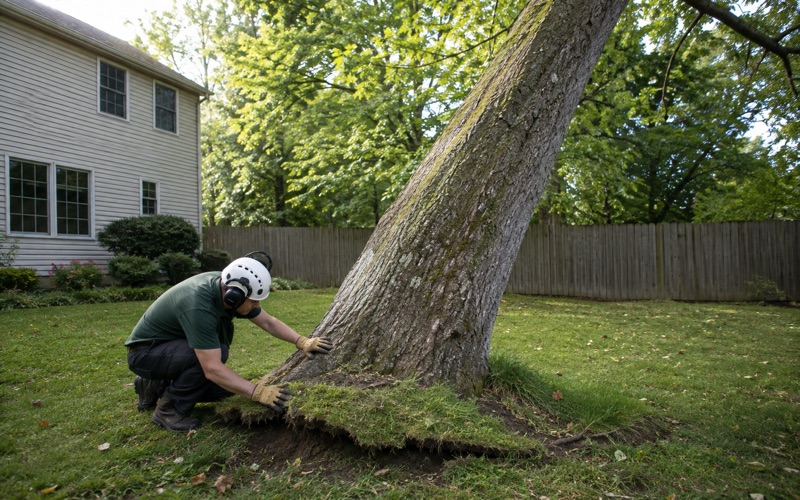
Deep, fast-draining sand is good for a tree’s roots and bad for its anchorage in a soaking storm. A saturated sandy loam holds a root plate far less firmly than a clay does, so the failure mode here tends toward windthrow, the whole tree tipping, rather than a stem snapping partway up.
That changes how we rig. A tree we would fell in one piece on stiffer ground gets sectional dismantling here when the ground is wet, and we plan the drop zone for a root plate that may move before the trunk does.
Buried concrete, steel and where the machine sits
The same glauconite that makes the soil what it is rates the map unit high for corrosion of concrete and moderate for corrosion of steel. Old footings, buried pipe and forgotten slabs on a 1960s lot are often in worse condition than their age suggests.
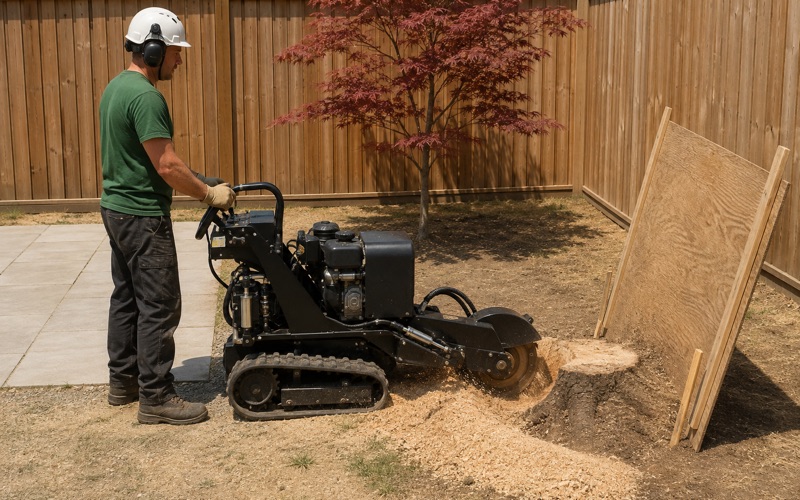
We probe before a stump grinder or a crane pad goes anywhere near them. Lawn and hardscape protection matting goes down on every job, which also keeps a tracked machine from rutting a sandy lawn that drains fast and knits slowly.
Who actually has authority over the tree in front of you
The strip between the sidewalk and the curb
The City of Bowie maintains trees on city property and along the streets in the public right-of-way, and employs a Community Forester in Parks and Grounds. A tree in the strip between sidewalk and curb is normally the city’s rather than the homeowner’s, and that is worth settling before anyone quotes it.
Where a tree does stand in the public road right-of-way, a Roadside Tree Care Permit from the Maryland Department of Natural Resources Forest Service comes first, under Natural Resources Article sections 5-401 through 5-411. All commercial roadside tree work must be conducted under the direction of a Maryland Licensed Tree Expert.
BGE is the electric utility here
The city’s own utilities page names Baltimore Gas and Electric as the electric utility for its residents, with 1-877-778-2222 for outages and downed wires, and BGE’s service territory reaches into Prince George’s County. Anyone assuming the utility from the county line alone gets this wrong, so we confirm it before a limb over a service drop becomes a phone call.
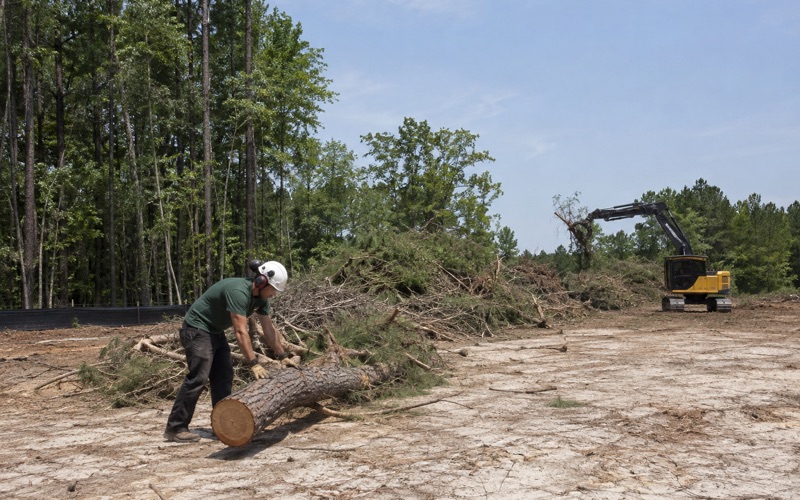
BGE handles vegetation management and line clearance on its own distribution system, and states plainly that it cannot assist customers with disposal of tree debris — final disposition of the wood is the property or tree owner’s responsibility. That is normally where we come in, with brush chipped and rounds handled as the written scope says.
Where a conservation plan is actually approved
The municipality does not hold zoning, subdivision or site plan authority inside its own limits. That authority sits with Prince George’s County under the State of Maryland’s Regional District Act and is administered by the Maryland-National Capital Park and Planning Commission, with the City holding review and comment rights under a memorandum of understanding.
So the operative rule on a development site is the county’s. Subtitle 25, Division 2 prohibits destroying woodland over 5,000 square feet without a permit or contrary to an approved Tree Conservation Plan, with a Type 1 plan at the conceptual stage and a Type 2 plan at the grading-permit stage; exemptions include properties under 40,000 square feet and cumulative woodland disturbance under 5,000 square feet across five years.
One review that does not apply
Chesapeake Bay Critical Area review is not part of a removal here, and that is a checked finding rather than a gap in our research. A Critical Area point query at the city center returns no feature, while the identical query at tidal control points at Fort McHenry and Fort Howard Park returns features as expected.
There is no tidal water inside the city limits. We still route every permit question before scheduling, because five counties and four towns answer differently and the wrong assumption costs a crew day.
Code duties and scheduling on a same-age street
A dead tree is a code matter, not just an eyesore
The city’s Housing and Property Maintenance Code, section 5-7(b)(1), puts an affirmative duty on the owner to remove dead trees and shrubs unless they stand within a forested area. On an open lot that makes a standing dead tree something more than a matter of taste.
With 42% tree canopy as of 2018 and the city’s own Urban Greening study naming private property as the greatest opportunity to plant more trees, most of this canopy is on private lots. So is most of the removal work, and most of the duty.
Nine feet over the sidewalk, fourteen over the street
Chapter 22, section 22-18 requires nine feet of clearance above the public sidewalk and fourteen feet above the street, and makes it unlawful to let a tree or shrub on the property or in the abutting right-of-way impair passage or obscure street signs, traffic control signs or streetlights. Crown raising to those numbers is often all a low limb needs.
We measure to the code rather than to a guess. When a crown reduction or some deadwooding will buy a sound tree another decade, we will say so instead of quoting a removal.
Sequencing a block rather than a single yard
A street where the trees are the same age tends to produce several jobs in a season, so we schedule with the neighbors in mind: shared access, one setup, and matting laid once rather than four times. HOA boards and property managers get the same treatment, with the sequence written down before anything starts.
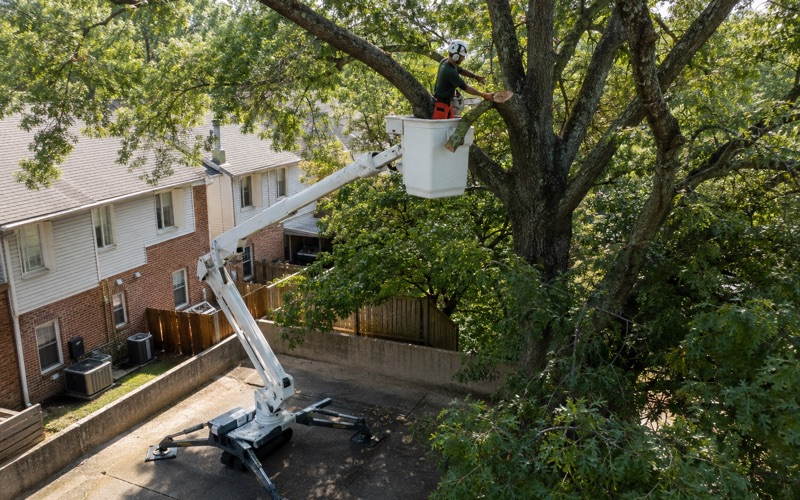
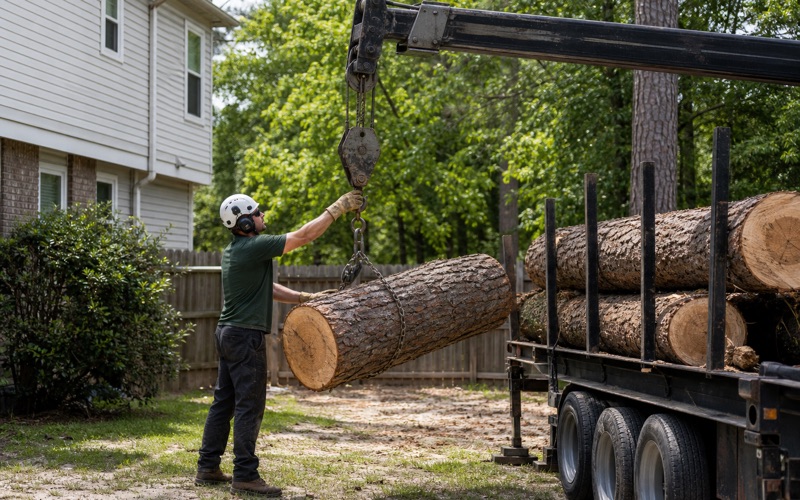
Our compact tracked equipment passes a standard back-yard gate, which keeps rear-yard removals off the front lawn entirely. Where there is no drop zone to fell into — a common problem on 1960s lots with the house, the drive and a neighbor’s fence all inside the fall radius — we bring a crane instead of taking chances.
Storm work and the county-wide warning
The city falls in National Weather Service forecast zone MDZ013, Prince Georges, a single undivided county-wide zone under the Baltimore/Washington office. A warning issued for that zone covers the whole county, so a wind event here is rarely a one-street problem and the phones reflect it.
We hold a 24-hour response for storm damage, fallen trees and trees resting on a structure, with crews who work this region’s storm season and its species year-round. The same crew that walks the estimate is the crew that does the final rake-out.
- 20+ Years in Anne Arundel County
- Free On-Site Estimates
- 24-Hour Storm Response