
Severn Tree Removal brings crane tree removal to jobs across Severn, MD where a tree simply cannot be felled or dismantled conventionally, and after more than 20 years working small lots in this corridor that describes a lot of jobs. A crane is not a luxury upgrade on those sites; it is frequently the only method that gets the tree out without something else getting damaged.
The decision comes down to the drop zone. A conventional removal needs somewhere for the tree, or each piece of it, to land. On a quarter-acre lot with a house, a driveway, a pool, a shed and a neighbor’s fence, that space often does not exist, and the alternative is dismantling the tree in small pieces over the things you are trying to protect.
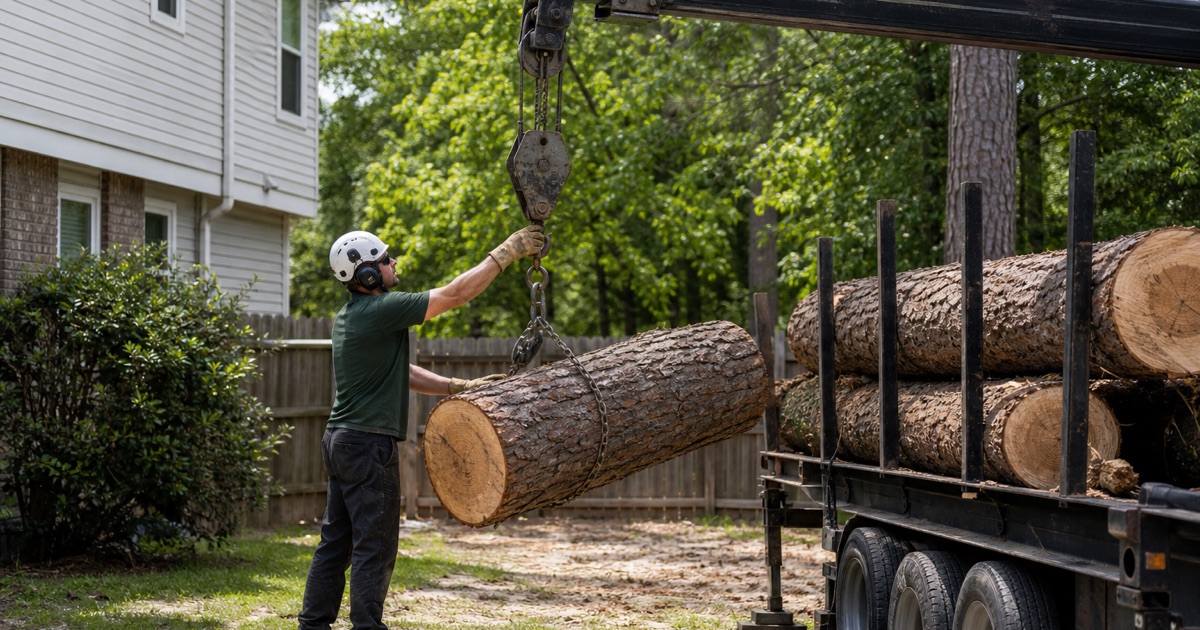
A crane changes the geometry entirely. Each section is picked before it is cut, lifted vertically clear of everything below, and set down in a staging area away from the structure. Nothing swings, nothing is dropped, and nobody is rigging a piece they cannot control.
When a Crane Is the Right Method
No Drop Zone at All
Where a tree stands between a house and a fence line with no clear ground in any direction, conventional dismantling means lowering every piece past the things at risk. A crane removes that exposure by taking the load vertically. On tight residential lots this is the single most common reason we bring one in.
Trees Over Structures, Pools and Hardscape
A pool, a paver patio, a screened porch or a finished driveway is expensive to repair and easy to damage with a dropped limb. Picking sections off the tree and swinging them to a staging area means nothing travels over the thing you are protecting under gravity alone, which is what makes the method worth its cost.
Storm-Damaged and Structurally Unsound Trees
A tree that has already failed partially, or one with a lifted root plate or a decayed trunk, is not a tree anybody should be climbing. A crane lets the work happen without putting a climber’s weight and a chainsaw’s forces into a stem nobody trusts, and it is often the safest answer to a storm call rather than the most elaborate one.
Large Removals Where Time Is the Cost
A big tree that takes two days to dismantle by hand can come out in a handful of picks. The hourly rate is higher and the total is regularly lower, because the job is measured in lifts rather than in days, and the site is clear at the end of one visit rather than three.
How a Crane Removal Actually Runs
Setup, Outriggers and Ground Bearing
The crane needs a stable, level setup within reach of the tree, and the ground under the outriggers has to carry the load. That is a genuine site constraint: a soft lawn, a septic field, a sidewalk or a buried utility can all rule out a setup position. We work it out at the estimate, since a crane that cannot set up is an expensive visit.
Rigging Each Pick Before Cutting
The climber or bucket operator attaches the section to the crane before making the cut, so the piece is already supported when it separates. Nothing is ever cut loose and caught. That sequence is the whole safety case for the method and it is why an unhurried crane job looks slow from the street.
Working Within the Machine’s Limits
Maryland’s own tree care and removal safety standard, COMAR 09.12.28, sets requirements for this work, including limiting load line speed to 100 feet per minute and keeping picks within 50 percent of the crane’s rated capacity for the configuration. Those limits shape how the tree is cut up — smaller, more numerous picks rather than heroic ones.
Traffic, Neighbors and Overhead Lines
A crane often sets up in the street, which means coordinating with neighbors, sometimes with the county, and always with whatever is overhead. Conductors near the swing path are a hard constraint rather than a judgment call. We identify all of it before the date, because a crane rescheduled on the morning is a cost nobody wants to carry.
Cost, Access and the Alternative
What Drives the Price
Crane work is priced on the machine, the crew and the time on site, plus the disposal volume like any removal. Setup difficulty and the number of picks matter more than the tree’s height. A straightforward setup with a short swing to a staging area is far cheaper than one requiring a long boom over a house from an awkward position.
When We Recommend Against It
Plenty of trees do not need one. Where there is a genuine drop zone, or where the tree is small enough to dismantle conventionally without exposure, a crane adds cost without reducing risk. We say so, because quoting a crane on a job that does not need one is an easy way to lose an estimate we should have won.
Combining a Crane Pick With the Rest of the Job
The crane handles the part of the tree that has to come out that way; the crew does the rest conventionally once the exposure is gone. Chipping, rounds, stump grinding and rake-out follow the same written inclusions as any removal, and the crane time is a line on the estimate rather than a vague premium.
Access for the Rest of the Work
A crane solves the overhead problem and none of the ground one. Once the stem is down, the wood still has to be processed and carried out, and the stump still has to be reached: a standard stump grinder needs a gate roughly 35 inches wide to get into a rear yard. We measure that on the same visit, so the machine that finishes the job is chosen at the estimate rather than sent back for.
- 20+ Years in Anne Arundel County
- Free On-Site Estimates
- 24-Hour Storm Response