Severn Tree Removal has handled tree removal in Severna Park for more than 20 years, and the first question we ask here is not what the tree is but whose ground it stands on. Enough of this community’s shoreline, lanes and shared open space belongs to a community district rather than to a single address that ownership, not urgency, tends to set the schedule.
That answer decides who signs the estimate, what paperwork we route and how quickly a crew can be booked. For a tree standing inside your own lot lines the path is short: we look at it, write the scope down and put it on the calendar. On common ground the work is authorized by the association that administers the district, and we plan for that from the first visit.
Estimates are free and on site, including a second look at a tree you are unsure about. We write the scope down before a crew is booked, with brush chipping, trunk rounds, the stump and the grindings all settled in advance, so nothing about the cleanup turns into a conversation afterward.
Nine Special Community Benefit Districts, and What They Hold
Nine Special Community Benefit Districts have parcels inside Severna Park: Carrollton Manor, Chartwell, Hollywood on the Severn, Kensington, Magothy Beach, Magothy Forge, Manhattan Beach, Severna Forest and Severndale. Between them they hold a real share of the trees a homeowner here looks at from a back window, and none of those trees belong to the nearest address.
How the districts are actually set up
Anne Arundel County Code Article 4 Title 7 Subtitle 2 authorizes these districts, and Sec. 4-7-101(d) requires each one to be administered by an incorporated community association offering membership to every property owner inside the district. Sec. 4-7-205 sets the tax as a uniform assessment per platted lot or per property tax account.
That structure is why a district is not simply a neighborhood name on a sign. It is a taxing body with an administering organization, an annual budget and officers, and the trees standing on its ground are its trees to manage, fund and remove.
Community beaches, piers and rights-of-way
What these associations hold and maintain is the shared waterfront: community beaches, piers, small parks, and the rights-of-way that reach them. Water covers 15.0% of Severna Park’s total area, and people here locate themselves by creek and cove name rather than by street, which tells you how much of the community that shared edge accounts for.
The trees on that ground are also the ones under the most pressure. Exposed shoreline edges, pier approaches and the narrow lanes where a leaning stem hangs over the only route in or out get looked at often and removed slowly, because the decision is not any one person’s to make.
Why the district line matters more than the property line
A back fence rarely marks where association ground begins. On the older waterfront blocks the lot stops well short of the water, and the strip between the last surveyed corner and the beach is district ground carrying its own trees.
We settle that question on the estimate visit rather than on the morning of the job. Which side of the line a trunk stands on decides whose authorization we need, and getting it wrong costs a scheduled day for everybody involved.
Looking for tree removal closer to North Laurel? See Tree Removal in North Laurel.
Who Can Authorize Work on Common Ground
On community common ground the authorization comes from the association administering the district, not from whoever owns the lot nearest the tree. It is the single thing that most often surprises a caller in Severna Park, and it is worth stating plainly before anyone expects a crew tomorrow.
The association is the decision-maker
Because the district’s association holds the beaches, piers, parks and rights-of-way, it is the body that decides what happens to the trees standing on them. A neighboring owner can report a hazard, press for a decision and be the person who calls us out to look at it, but the go-ahead is the association’s to give.
We are used to that pace and we plan around it. Scheduling built around boards, property managers and grounds committees is ordinary work for us, and we will hold a date while a board meets rather than push for a decision nobody is authorized to make yet.
When the tree is not on your lot
Plenty of calls here start with a tree that is obviously a problem and just as obviously not on the caller’s ground. We will still come out, look at it and write down what we find, at no charge, the same as we would for a tree in your own yard.
What we hand back is a written scope the caller can take to the association: what the tree is doing, what removing it involves, what the site requires and what the price includes. A board acting on a written scope moves considerably faster than a board acting on a secondhand description of a lean.
Getting sign-off before we schedule
We do not book a crew for common-ground work until the authorization exists and the permit routing is finished. Five counties and four towns across our service area answer permit questions differently, so we handle that ahead of the date instead of discovering it with a chipper already parked on a community lane.
Once the sign-off is in hand the job runs like any other. The same crew works it from the estimate through the final rake-out, matting goes down on lawn and hardscape, and the written inclusions are honored exactly as they were written.
Licensing and Permits That Sit On Top of the Association’s Approval
An association’s authorization settles who may say yes. It does not settle what the state and the county require of the crew doing the work, and those obligations apply on district ground exactly as they do on a private lot.
Maryland Licensed Tree Expert, and the contract that proves it
Maryland requires a Licensed Tree Expert for tree care performed for hire under Natural Resources Article Sec. 5-417(a)(1), with an exemption for trees 20 feet tall or less. COMAR 08.07.07.03D makes a written contract carrying the license number mandatory, which means the number belongs on the paperwork a board is being asked to approve.
Anne Arundel County says the same thing from its own side: contracted tree removal or pruning may only be performed by a Maryland Licensed Tree Expert. For an association spending assessment money collected from every lot in the district, that is the first line to check on any bid.
The Roadside Tree Care Permit turns on the trunk
Work on a roadside tree in the public right-of-way needs a Roadside Tree Care Permit from the Maryland Department of Natural Resources Forest Service, and the test is where the trunk stands, not where the canopy reaches. A tree overhanging the roadway from inside the property line is not a roadside tree, however far out it leans.
The project fee is 25 dollars, and an emergency removal carries a one-week reporting duty under COMAR 08.07.02.03C. Our 24-hour response for storm damage and trees resting on a structure covers that reporting as part of the job rather than leaving it with the caller.
Critical Area buffer work needs a Vegetation Management Plan
Inside the Chesapeake Bay Critical Area buffer, Anne Arundel County requires an approved Vegetation Management Plan before any vegetation is cut, pruned or removed, dead trees included, and stems under 4 inches are not exempt whatever a neighbor may have told you. The county forestry program takes those questions at (410) 222-7441.
A pre-1985 half-acre lot inside the Critical Area carries a 6,534 square foot clearing cap with mitigation at 1.5 times. Half-acre lots are the second most common size in Severna Park, so that cap constrains ordinary back-yard jobs here rather than rare ones, and it is worth knowing before a plan is drawn.
What the Ground Itself Changes About the Work
Two things about Severna Park’s ground shape how a removal actually runs, and both of them show up long before the first cut. The soil is sand, and the access is narrow.
Sandy soil, wide root plates and windthrow
A nine-point soil sample across the community returned Downer-Hammonton and Downer-Hammonton-Urban land complexes, Evesboro-Galestown-Urban land, Patapsco-Evesboro-Fort Mott, Patapsco-Fort Mott-Urban land, loamy Udorthents and open water. The Evesboro series is classed Mesic, coated Lamellic Quartzipsamments and is excessively drained, which is a technical way of saying clean sand.
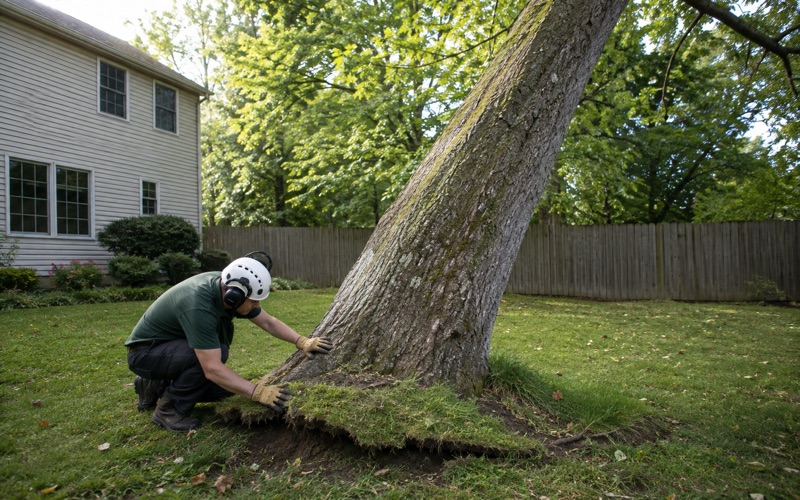
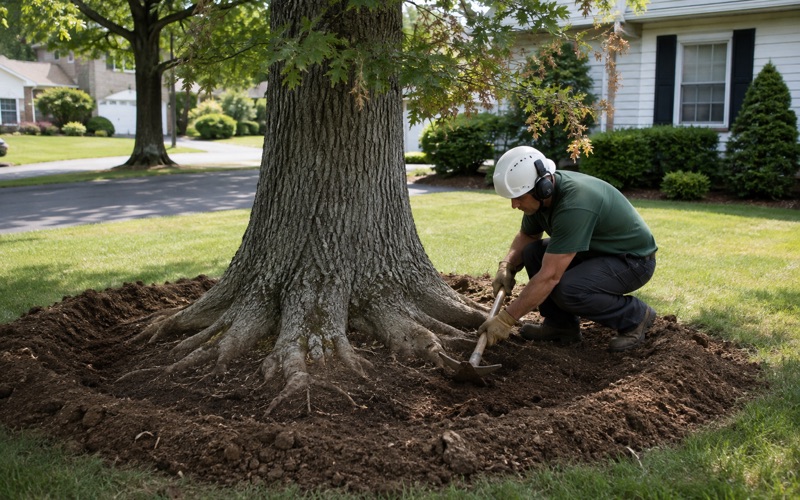
Sand that drains that freely digs and grinds easily, but it gives a large tree a wide shallow root plate instead of deep anchorage. Mature specimens here are uprooted by wind rather than snapped off, which is why a lean that opened up after a storm deserves a second look, and why we do not charge for that second visit.
The slopes running down to the creeks
The Evesboro-Galestown unit sits on 15 to 25 percent slopes, which on the ground means the ravine sides falling away toward the creeks. Those are the hardest sites on any job here: poor bearing for outriggers, no easy machine route in, and rigging that has to work across the fall line rather than along it.
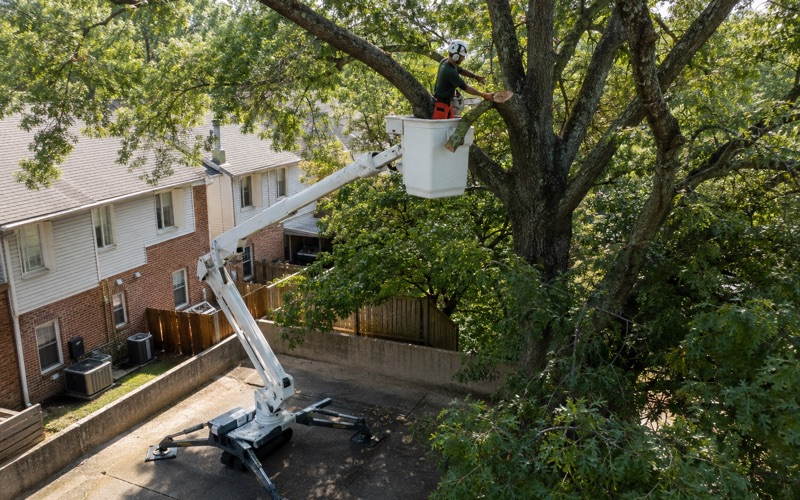
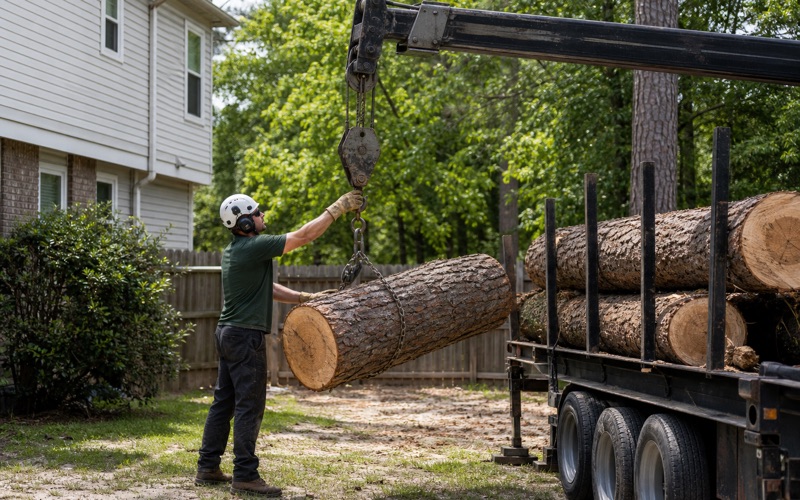
That is where sectional dismantling earns its cost, and where a crane-assisted removal is the honest answer when there is no drop zone to fell into. Our compact tracked equipment is sized to pass a standard back-yard gate, so on these lots machine width rather than machine power usually decides what can reach the tree.
Access, debris and what leaves the site
On the older waterfront lots the route in is the real constraint. Narrow shared lanes down to community beaches, bulkheads, septic fields and pier approaches all limit where a truck or a crane can sit, so we walk the route during the estimate and say plainly what will fit and what will not.
Cleanup is not something to leave at the curb here. County curbside collection takes limbs under 4 feet long and 4 inches thick in bundles under 40 pounds and will not take logs at all, and BGE does not remove wood debris after a line-clearance cut on its own equipment.
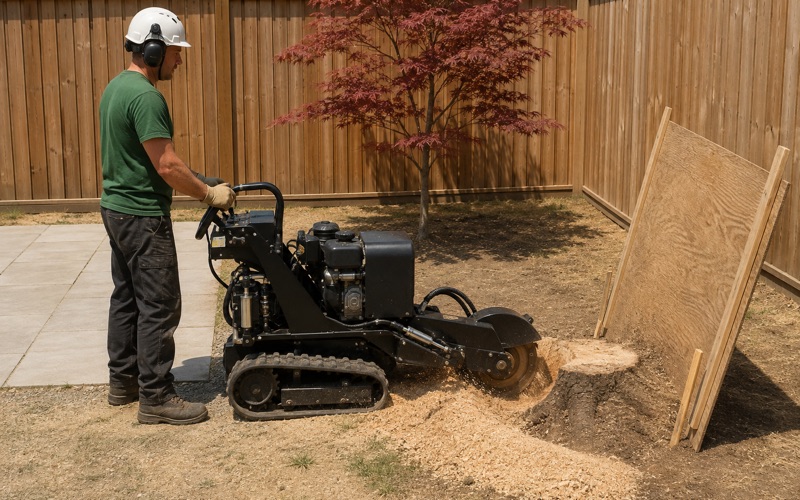
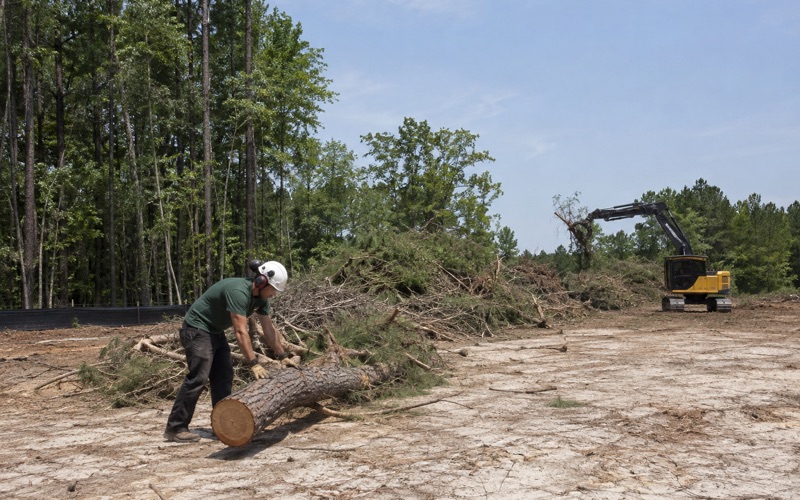
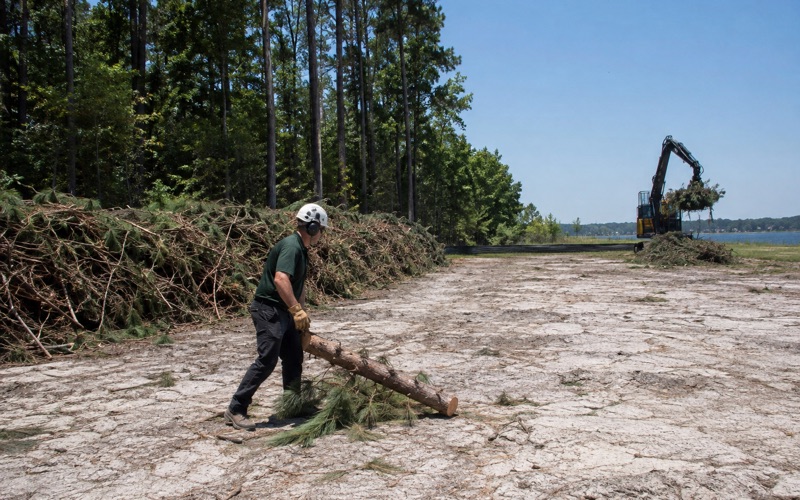
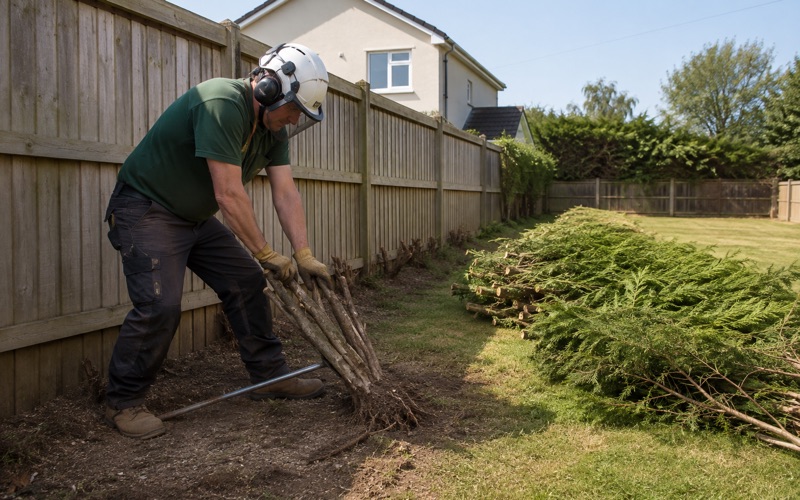
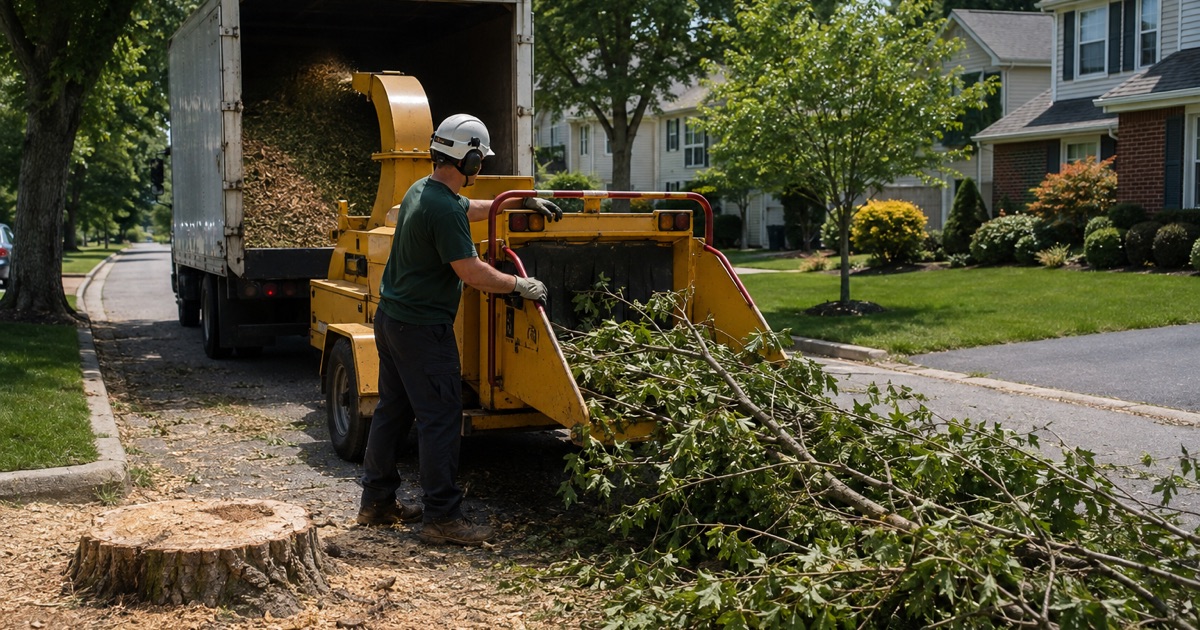
Our written inclusions settle all of that before a crew is booked: brush chipped, trunk rounds handled, stump and grindings agreed in the scope. On common ground that matters twice over, because an association approving a removal is approving what the site looks like when we drive away.
- 20+ Years in Anne Arundel County
- Free On-Site Estimates
- 24-Hour Storm Response